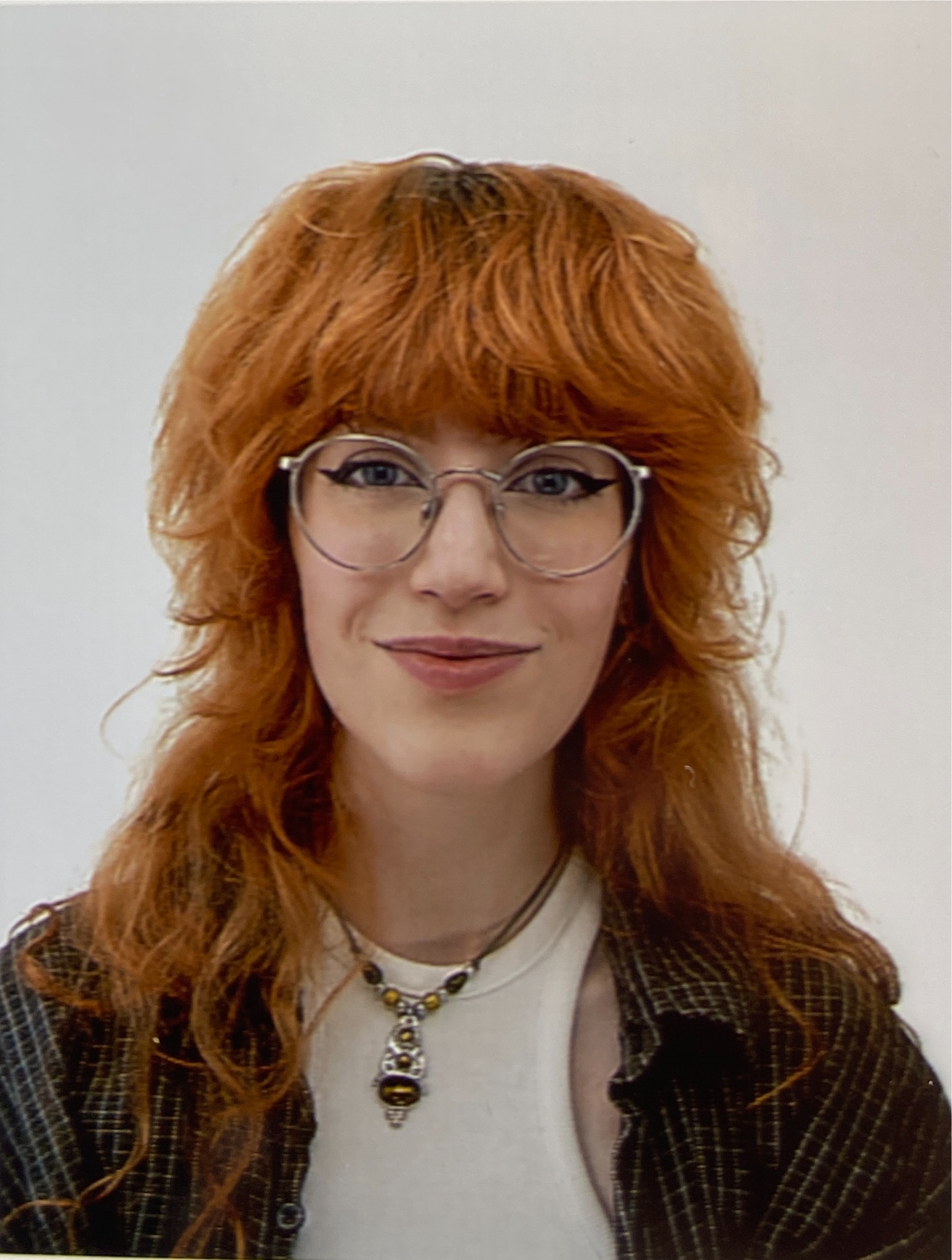
Team
Digital Methods in the Humanities and Social SciencesCampus
Paris
Me in brief:
I am a PhD candidate under the supervision of Nicolas Baumard (Institut Jean Nicod, ENS/CNRS), co-supervised by Marie Puren (EPITA) and Florian Cafiero (EPITA, Centre Jean Mabillon). My research focuses on lesbian literature of the Belle Époque, combining literary history, gender studies, and computational approaches from the digital humanities.
Short Bio
My academic background combines literature, philosophy, history, gender studies and digital humanities.
From 2018 to 2021, I attended a classe préparatoire littéraire (A/L) at Lycée La Bruyère in Versailles, while completing the equivalent of a double bachelor's degree in Philosophy and English.
I then pursued a master's degree at the École nationale des chartes - PSL (2021–2023), followed by a second-year master's degree (M2) in Gender Studies, specializing in History, at the École des hautes études en sciences sociales (EHESS), which I completed in 2024.
I was subsequently awarded a doctoral contract through the Translitterae programme.
Research Interests
My research focuses on lesbian literature during the Belle Époque, approached as a particularly revealing case of literary discourse produced under social constraints. In a historical context marked by homophobia and restrictive gender norms, I investigate how social constraints may translate into literary constraints, shaping both the content and the forms of literary expression.
Combining literary history, gender and sexuality studies, and computational methods, my research follows two connected questions: how lesbian women wrote, and how lesbianism was written about in the literature of the period. I explore these questions through several approaches:
Writing under constraint: Investigating how lesbian writers navigated the social, moral, and literary conventions of their time, and how these constraints may have influenced their modes of expression, narrative strategies, and thematic choices. Rather than seeking to identify an inherent "lesbian writing style," I examine how historically situated conditions of literary production shape discourse.
Literary representations of female homosexuality: Analysing how lesbianism and female same-sex desire were portrayed, discussed, and constructed in literary works, comparing representations produced by lesbian authors with those found in works by other writers, assessing whether a literary discourse produced under such social constraints reflects, reproduces, or challenges prevailing social norms.
Comparative corpus analysis: I have built corpora of works by lesbian women, heterosexual women, gay men, and heterosexual men, each divided into poetry and prose. Comparing these texts helps me put the patterns I observe into context, rather than attributing them to sexual orientation alone.
Gender and literary genre: Exploring the relationship between gender, sexuality, and literary forms, with particular attention to the distinction between poetry and prose. One question I am exploring is whether poetry offered lesbian writers more freedom than prose to express experiences and desires that were socially stigmatised. The other corpora provide a way to see whether similar differences appear elsewhere.
Computational literary studies and digital humanities: Using natural language processing (NLP), topic modeling, and large language models (LLMs) to investigate historical literary corpora. By combining quantitative analysis with close reading and historical contextualisation, I seek to identify patterns in literary discourse and interpret them in relation to the social and cultural conditions in which these texts were produced.
Teaching
I teach at the University of Orléans and EPITA, introducing students to digital research methods and academic research practices.
Master's in Literature — University of Orléans
- Introduction to Digital Methods for Research in the Humanities and Social Sciences: Introducing digital methods and quantitative tools for research in the humanities and social sciences.
Bachelor in Computer Science — EPITA
- Seminar of Documentary Research: Teaching as part of the seminar led by Aymeric Brody.